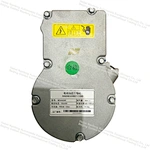
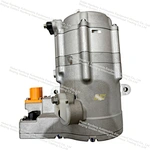
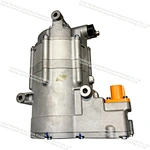
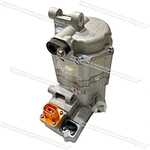
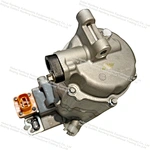
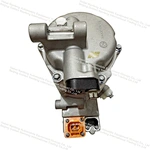
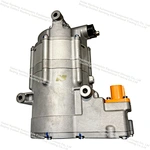
24v electric ac compressor
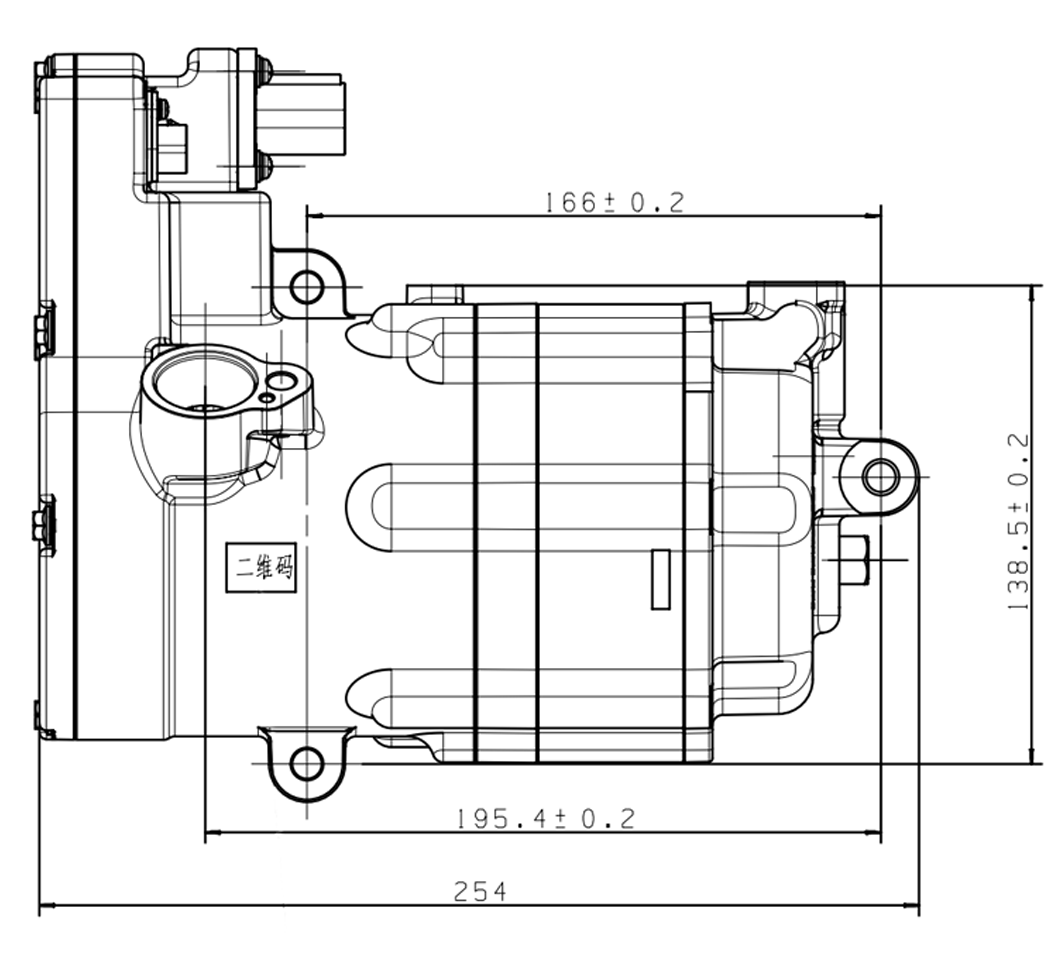
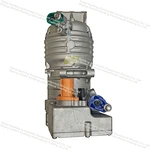
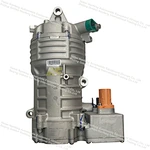
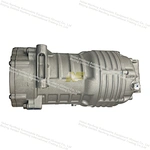
NEA46CAE
The electric air conditioning compressor is the core of the automotive air conditioning system and the overall vehicle thermal management.
Its task is to drive the refrigerant cycle, providing cooling or heating (in heat pump systems) for the passenger compartment and cooling the power battery.
Its task is to drive the refrigerant cycle, providing cooling or heating (in heat pump systems) for the passenger compartment and cooling the power battery.
Quantity:
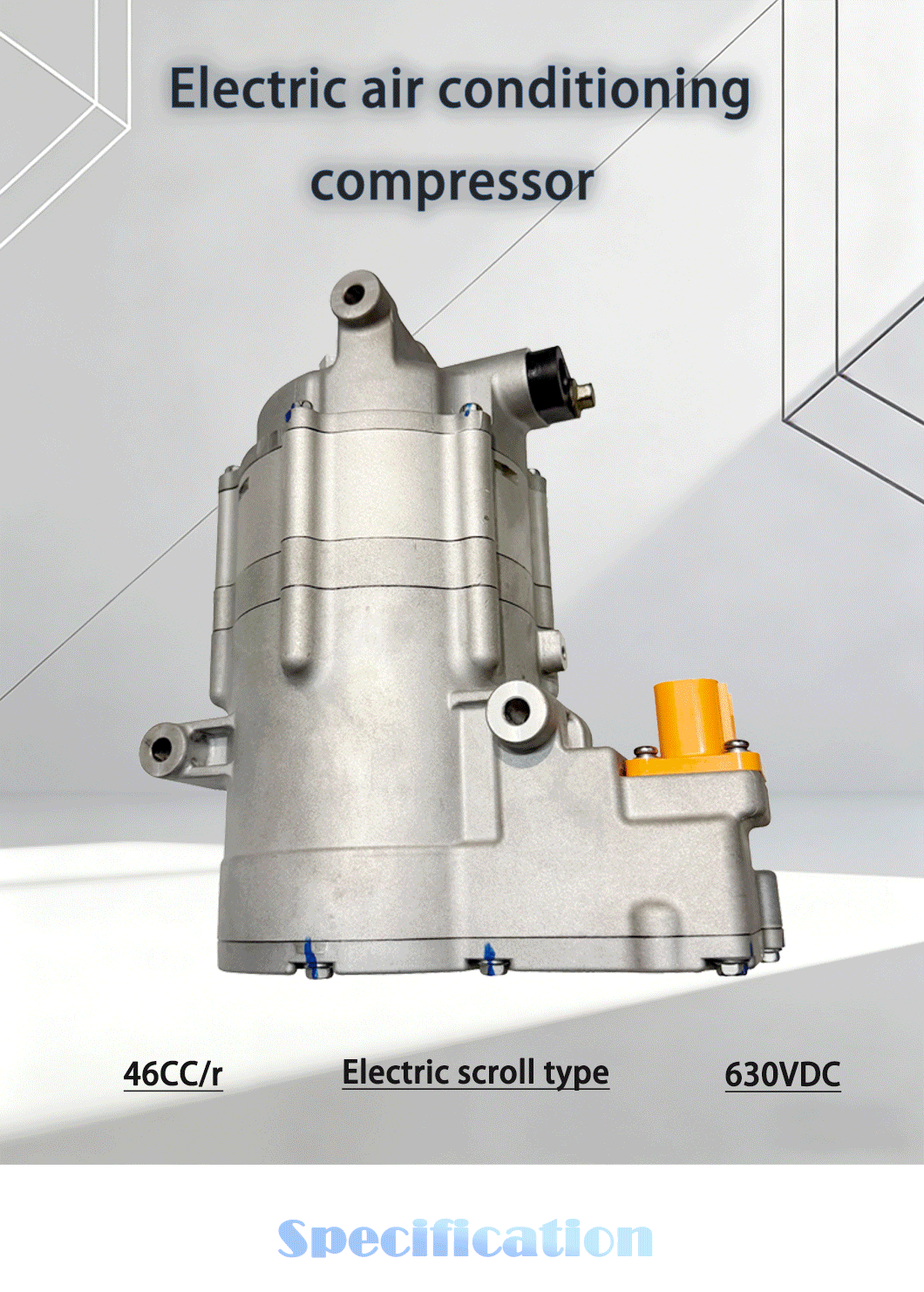
Model | NFEZC45 |
Type | Electric scroll |
Refrigerant | R134a/HF01234-yf |
Displacement | 46cc/r |
Speed range | 800-11000RPM |
Refrigerant Oil/Oil Volume | POE68S/150ML |
HV Rated Voltage | 630V(DC) |
LV Rated Voltage | 24VDC |
The electric air conditioning compressor is the core component of an electric vehicle's air conditioning system. Its working principle involves using an electric motor to compress a low-temperature, low-pressure gaseous refrigerant into a high-temperature, high-pressure gas, propelling the refrigerant through a closed system to achieve cooling (or heating) inside the vehicle.
Its core workflow follows a refrigeration cycle of"compression-condensation-expansion-evaporation":
1. Compression: An electric motor drives the compression mechanism—typically a scroll assembly or reciprocating piston—to adiabatically compress low-temperature, low-pressure refrigerant vapor drawn from the evaporator. This process elevates both the refrigerant’s pressure and saturation temperature, yielding high-temperature, high-pressure superheated vapor.
2. Condensation: The high-temperature, high-pressure refrigerant vapor is routed to the external condenser, where it rejects latent heat to ambient air via forced convection. As a result, the refrigerant undergoes full desuperheating, condensation, and subcooling, exiting as a high-pressure, subcooled liquid.
3. Expansion: The high-pressure liquid refrigerant passes through a thermostatic expansion valve (TXV) or electronic expansion valve (EXV), undergoing an isenthalpic throttling process. This reduces its pressure and temperature sharply, producing a low-temperature, low-pressure liquid–vapor mixture (typically 20–30% vapor quality).
4. Evaporation: The low-temperature, low-pressure refrigerant mixture enters the cabin-mounted evaporator. It absorbs sensible and latent heat from the recirculated/ambient air stream, fully vaporizing into saturated or slightly superheated vapor. This endothermic phase change cools and dehumidifies the air delivered to the passenger compartment.
5. Circulation: The resulting low-temperature, low-pressure refrigerant vapor is suctioned back into the compressor inlet, thereby completing the closed-loop thermodynamic cycle—repeated continuously to maintain cabin thermal comfort and system stability.