How to enhance the range, safety and lifespan of electric vehicles
What is Battery Liquid Cooling?
Battery liquid cooling is currently the most widely adopted active thermal management technology in the electric vehicle industry and forms part of the execution system within the Battery Management System (BMS). In such a system, the heat produced during battery charging and discharging is transferred via direct contact with cooling plates and then actively dissipated to the external environment through the liquid cooling circuit. This process is essential for preventing thermal runaway and extending battery life. Its primary goal is to keep the battery pack within its ideal operating temperature range of 10°C to 45°C, while limiting the temperature variation among individual cells to within 5°C. NF's technology can even achieve precise control to within 0.5°C.
Unlike passive thermal management approaches—such as phase change materials or heat pipes—battery liquid cooling is an active method that can either cool or heat the battery depending on environmental conditions and operating demands. It efficiently absorbs and removes heat generated during charge and discharge cycles, thereby ensuring consistent power output. At the same time, it can warm the battery pack when ambient temperatures are low. As EV battery power density continues to rise and fast-charging technology becomes more widespread, liquid cooling has become an indispensable core technology for high-power commercial EVs operating under complex conditions.
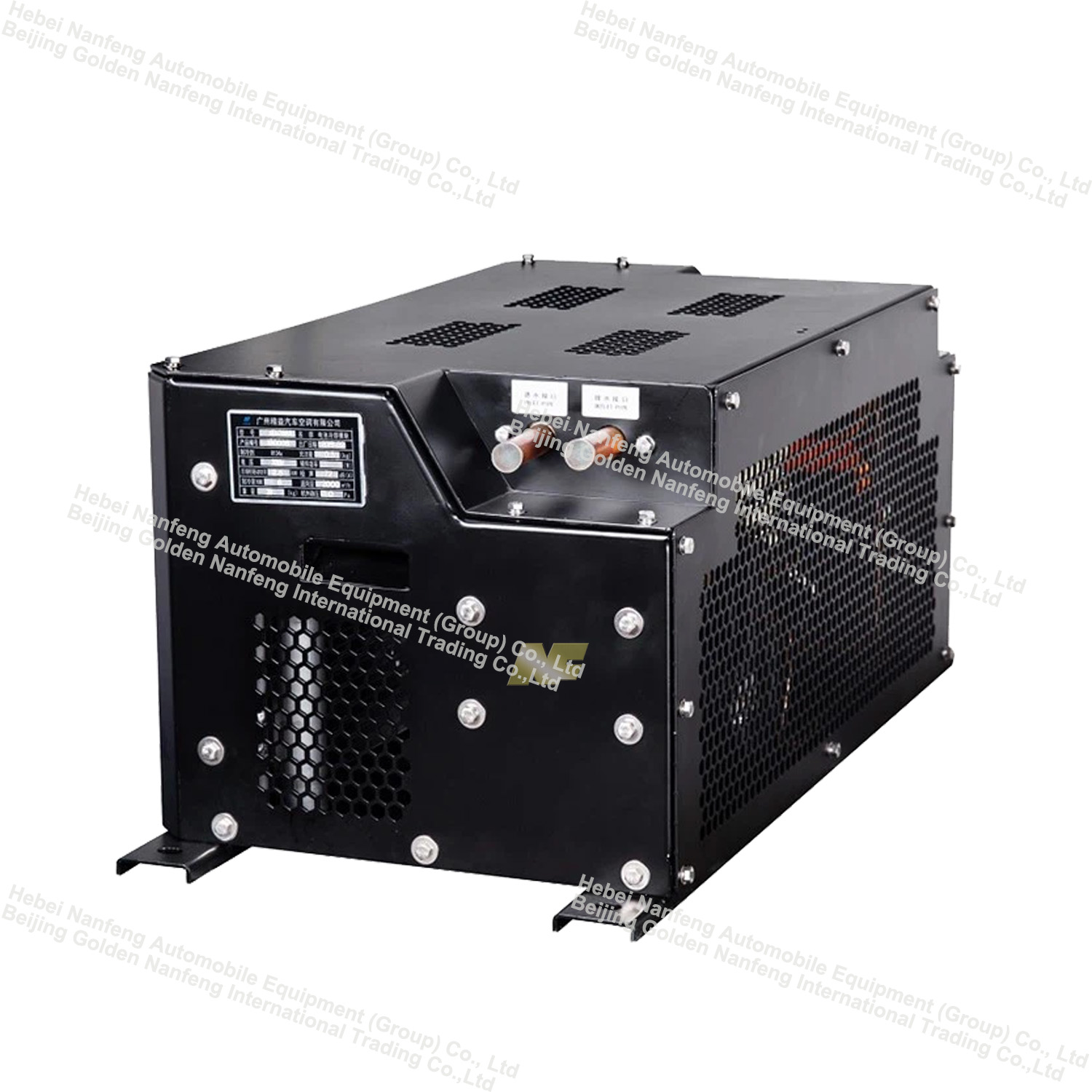
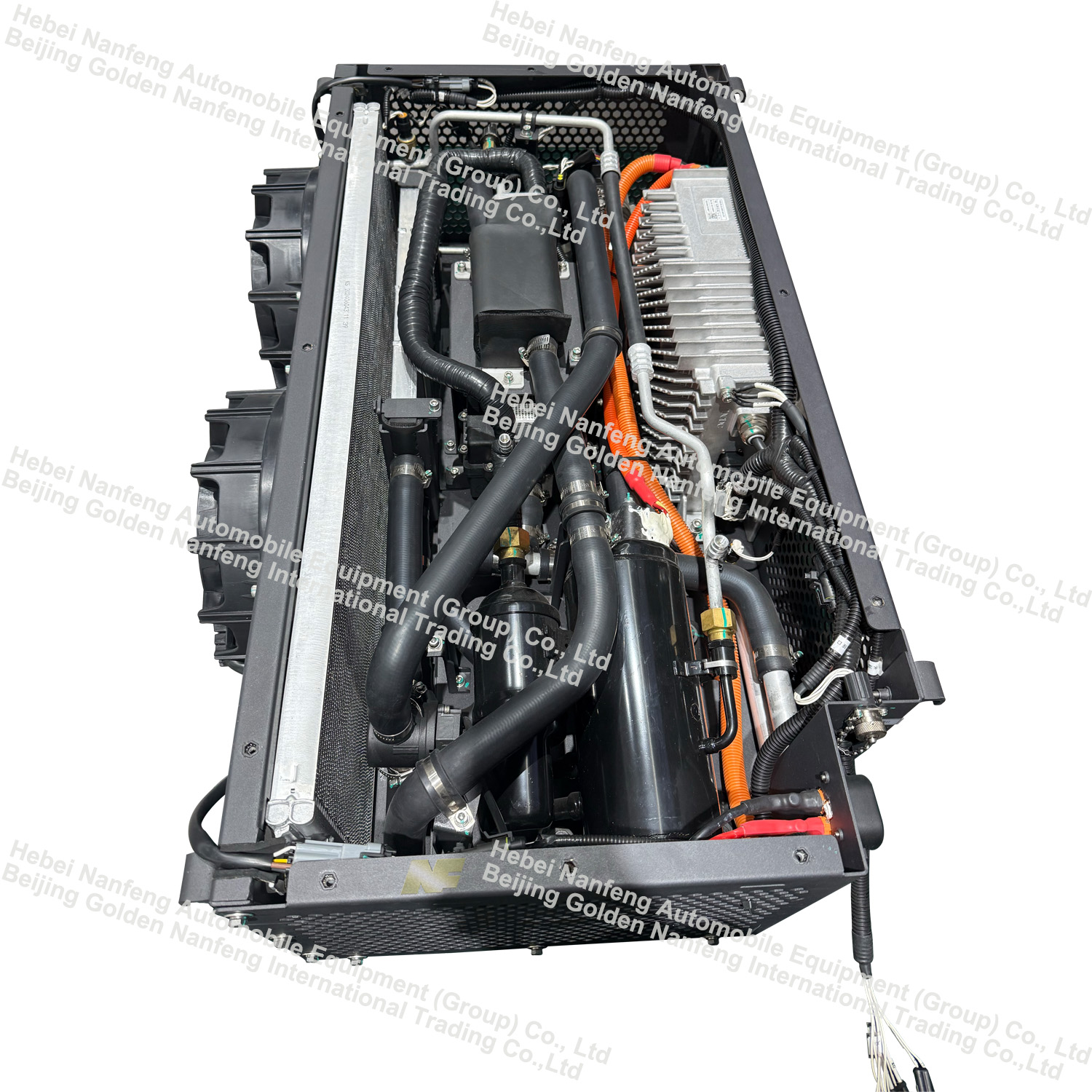
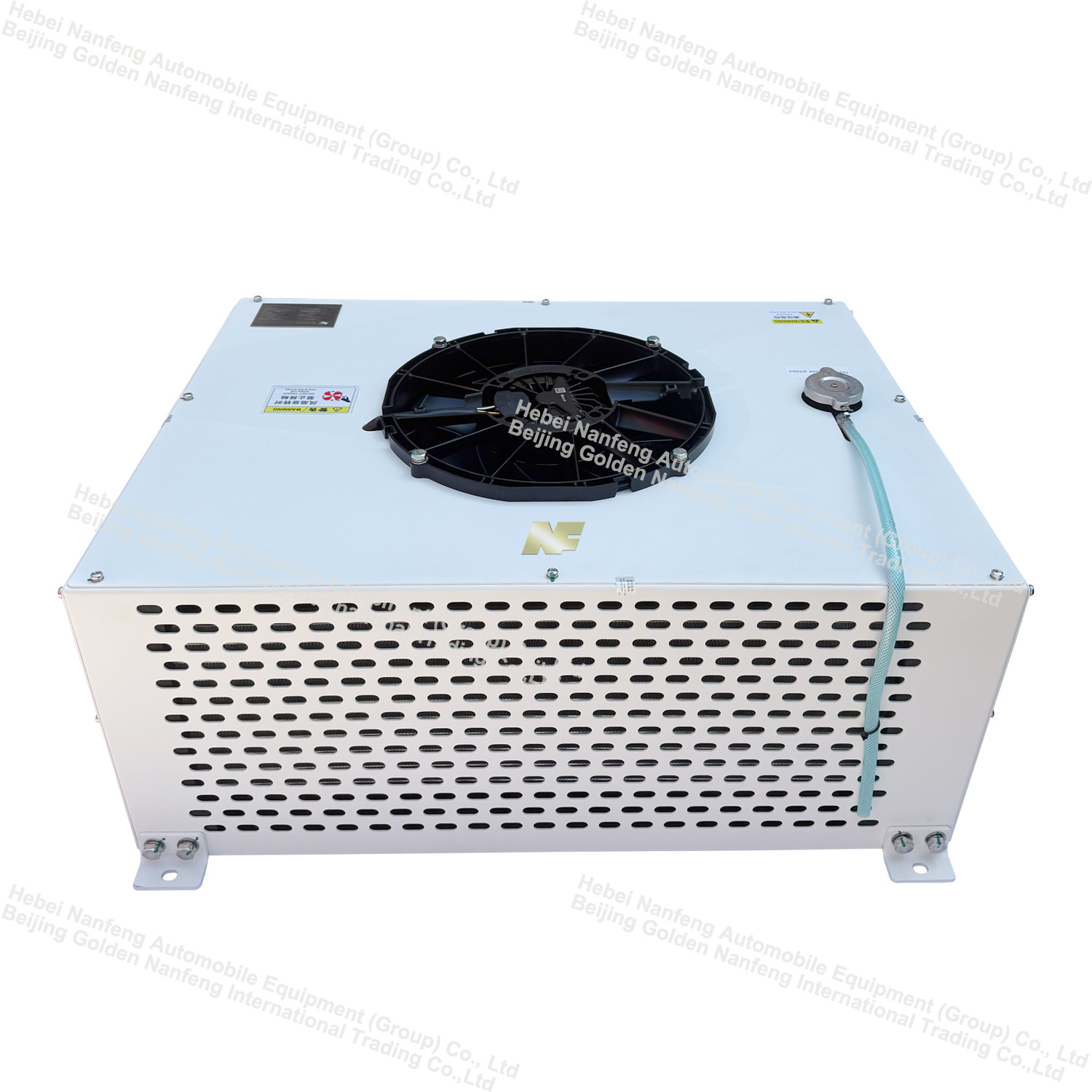
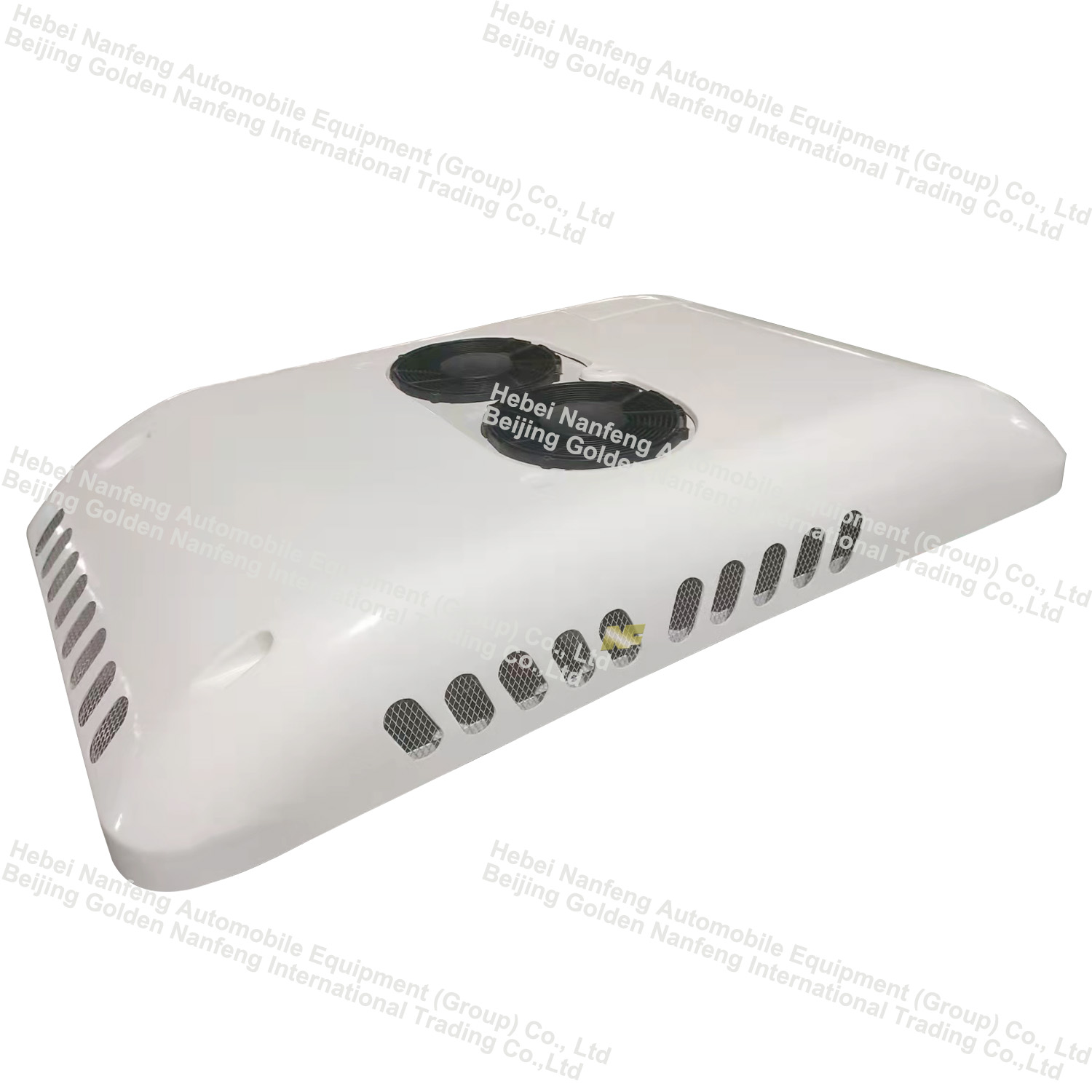
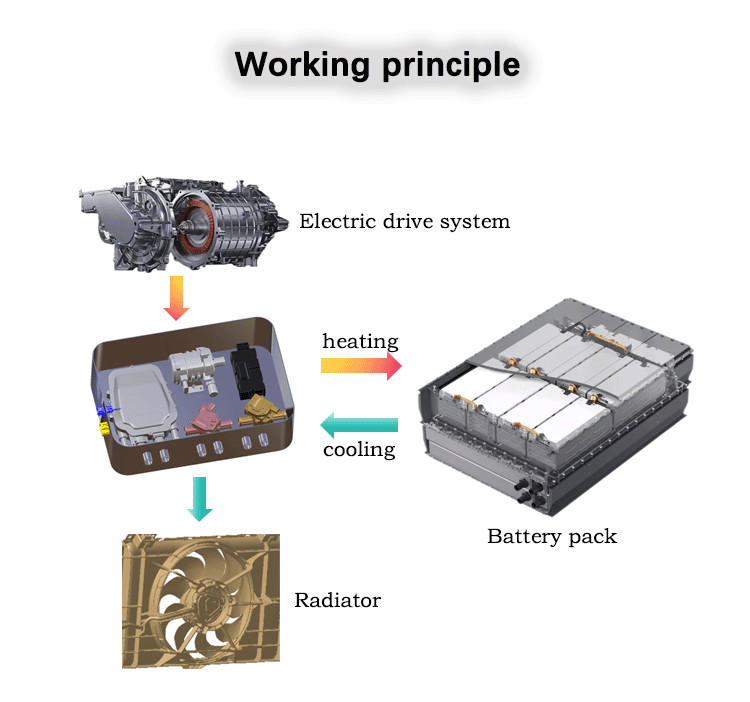
The operating principle of battery liquid cooling relies on heat conduction and convective heat transfer. The entire process forms a closed-loop circulation of coolant and generally consists of three core steps.
-
Heat absorption:
Heat generated by the battery pack during charging and discharging is conducted to the liquid cooling plate, which is in direct contact with the battery. As the coolant flows through the channels inside the cooling plate, it absorbs this heat. -
Heat dissipation:
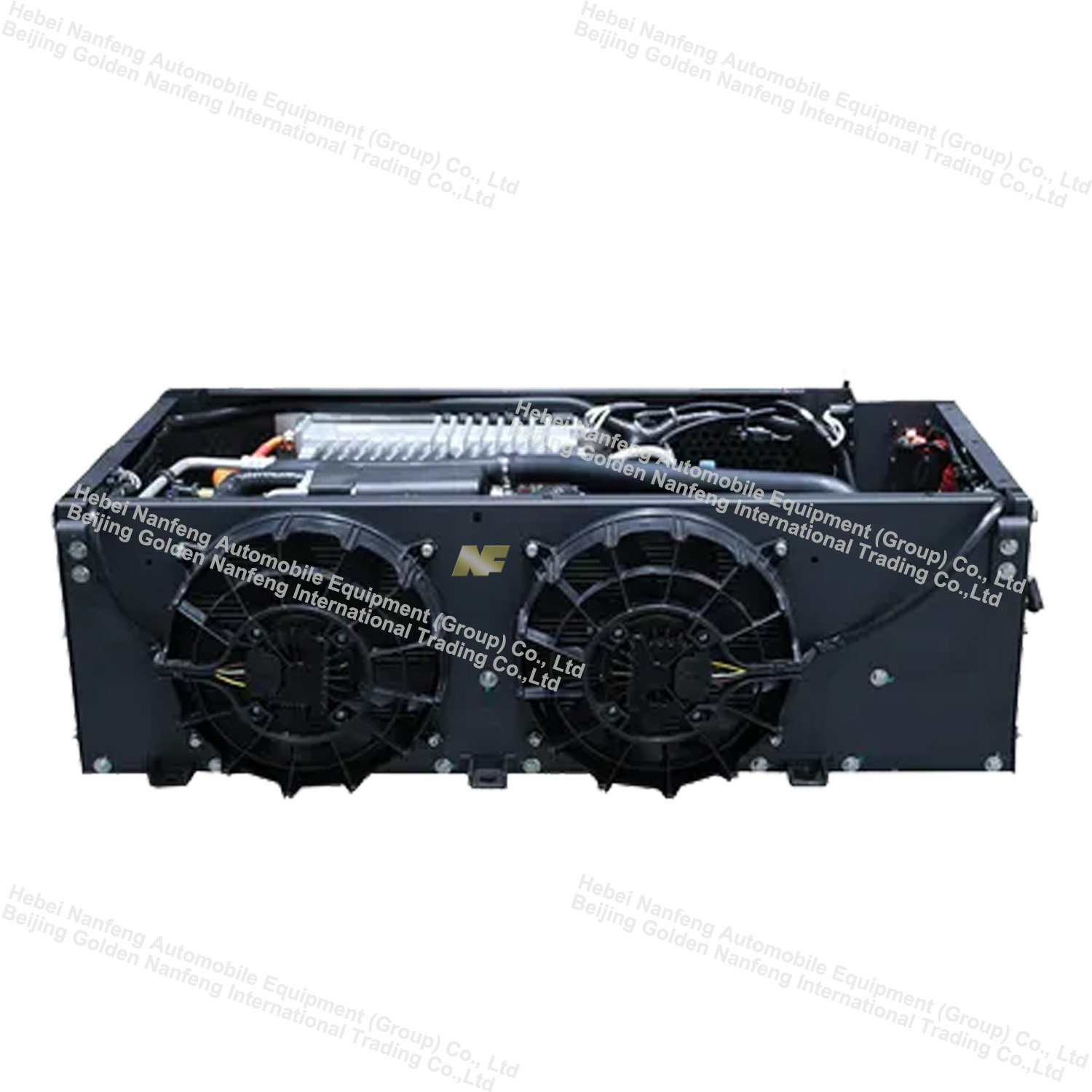
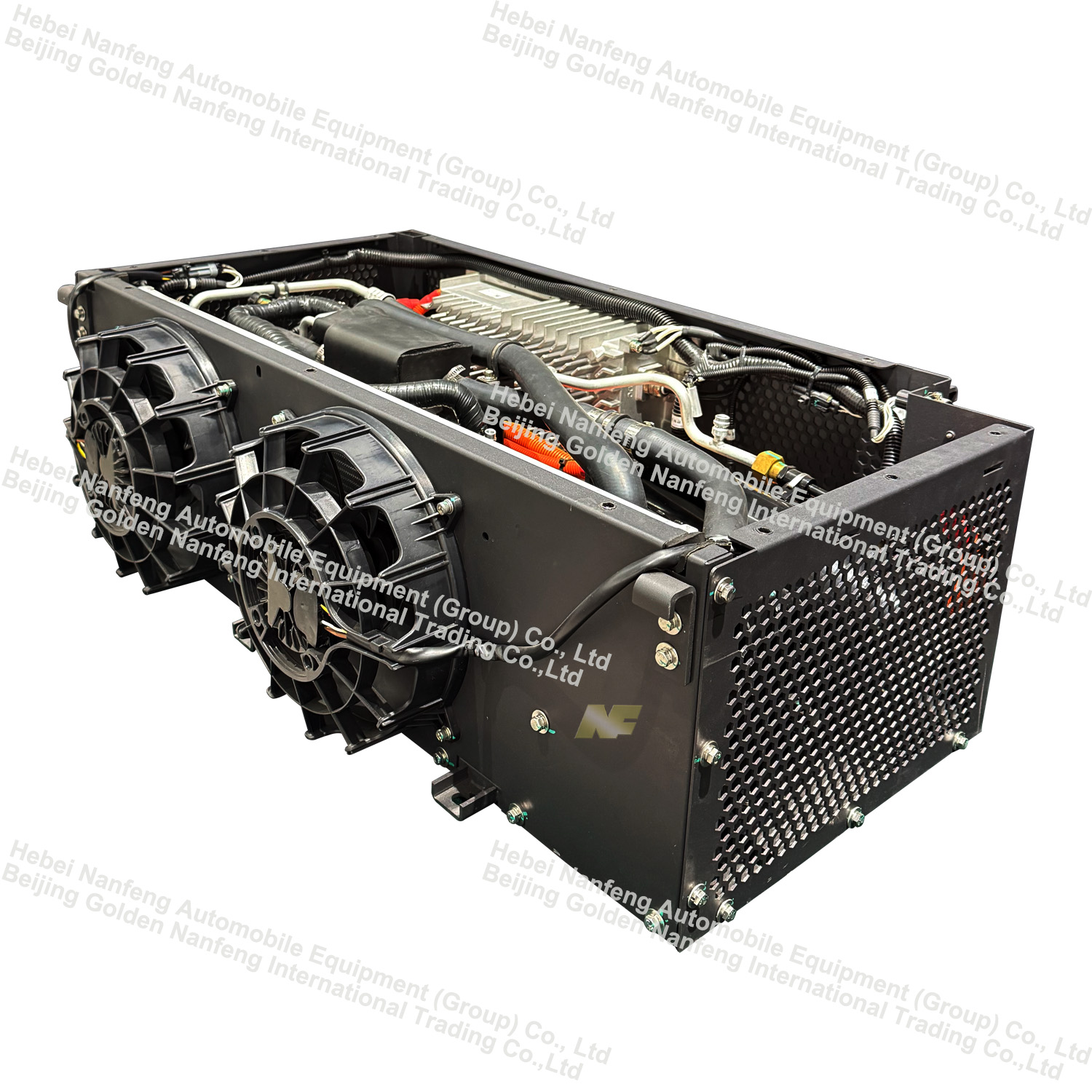
Driven by a water pump, the heated coolant moves to the radiator. The radiator then releases the heat into the surrounding air through forced air cooling, quickly lowering the coolant's temperature and making it ready for reuse. -
Circulation:
The cooled coolant returns to the liquid cooling plate, completing the closed loop. These steps are continuously repeated. -
Heating mode:
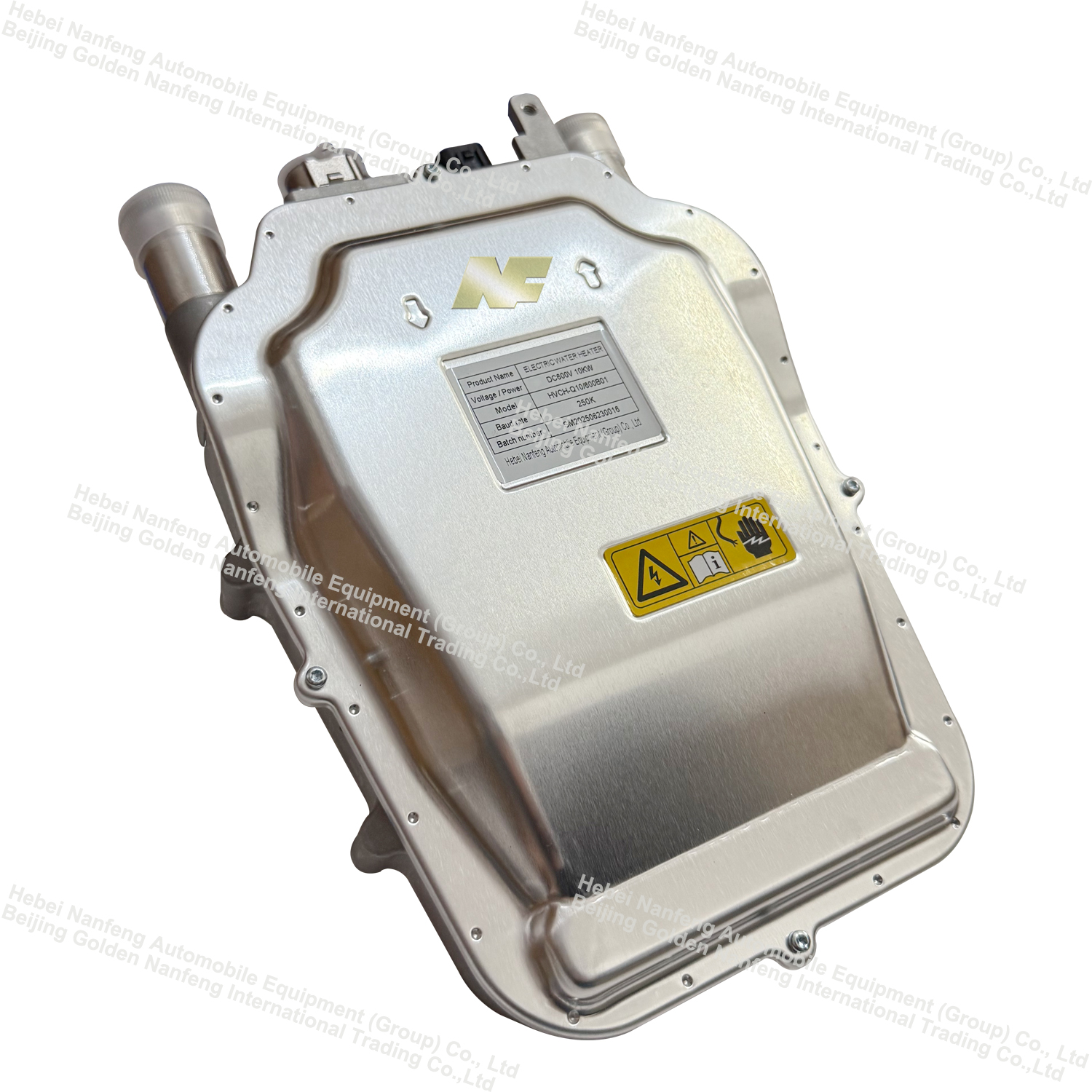
When ambient temperatures drop below 0°C, the cooling circuit shuts down, and a PTC heater is activated. The warmed coolant is then delivered to the liquid cooling plate, transferring heat to the battery pack. This resolves issues such as reduced battery capacity and difficulty starting in cold conditions.
This closed-loop system allows for precise temperature control and is typically managed by the battery management system (BMS) via a CAN bus. It keeps the battery cool in summer and warm in winter. Of course, if the heating mode is unnecessary in your region, it can be disabled to reduce costs.
Air Cooling vs. Liquid Cooling for Electric Vehicle Batteries:
What is Thermal Management System?
Detailed Introduction And Principle Of Electric Compressors
Related Article