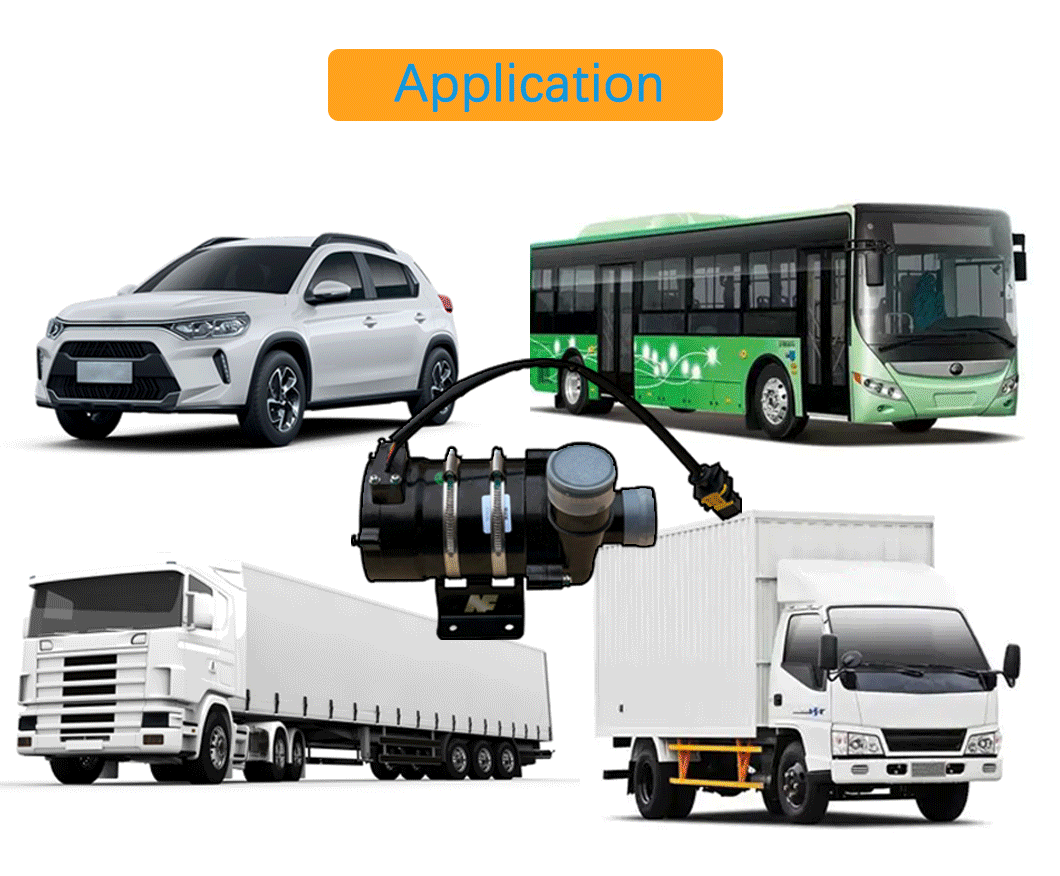





electric truck water pump
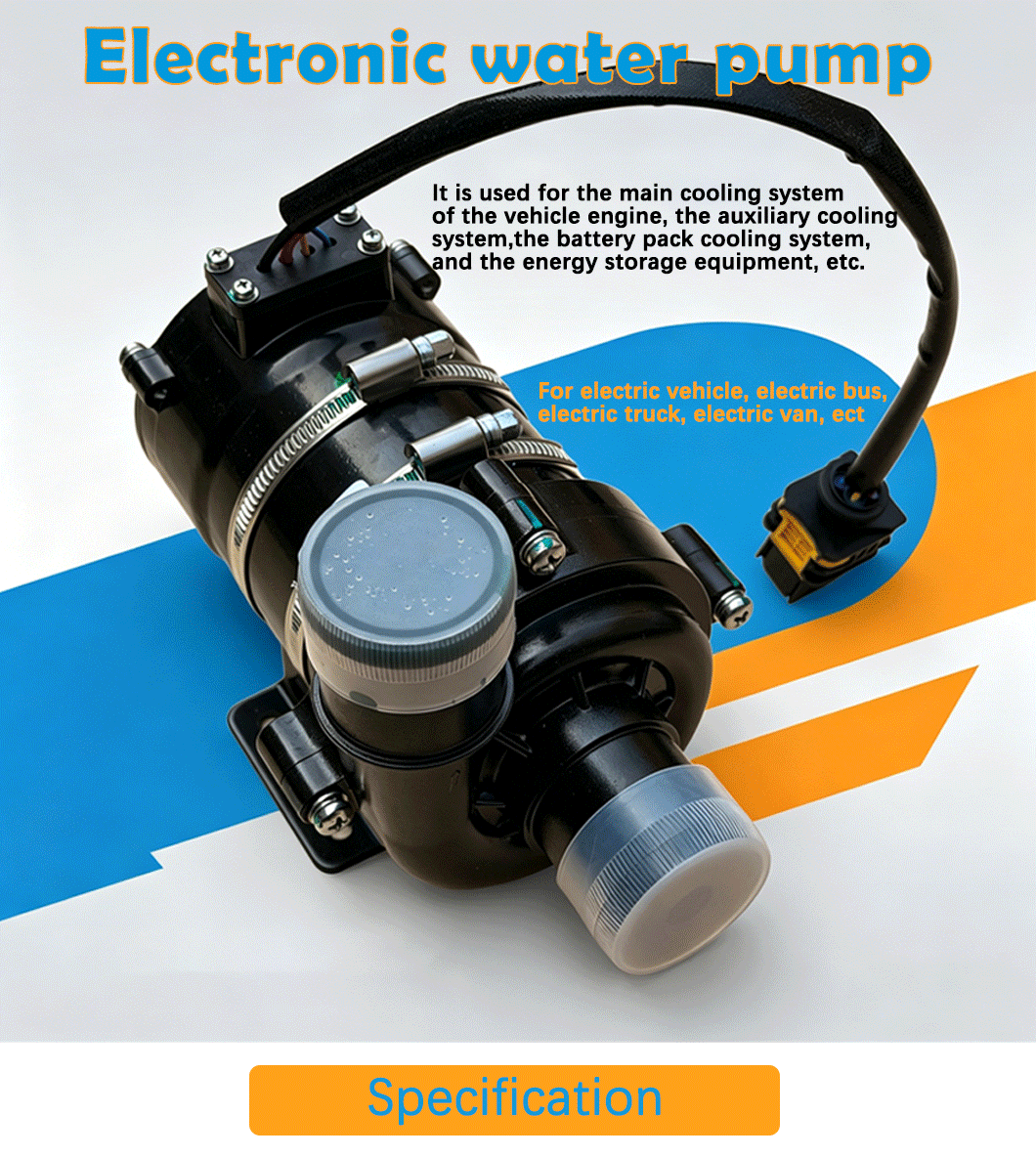
| Rated voltage | DC 24V |
| Operating voltage range | 16V~32V |
| Rated power | 350W |
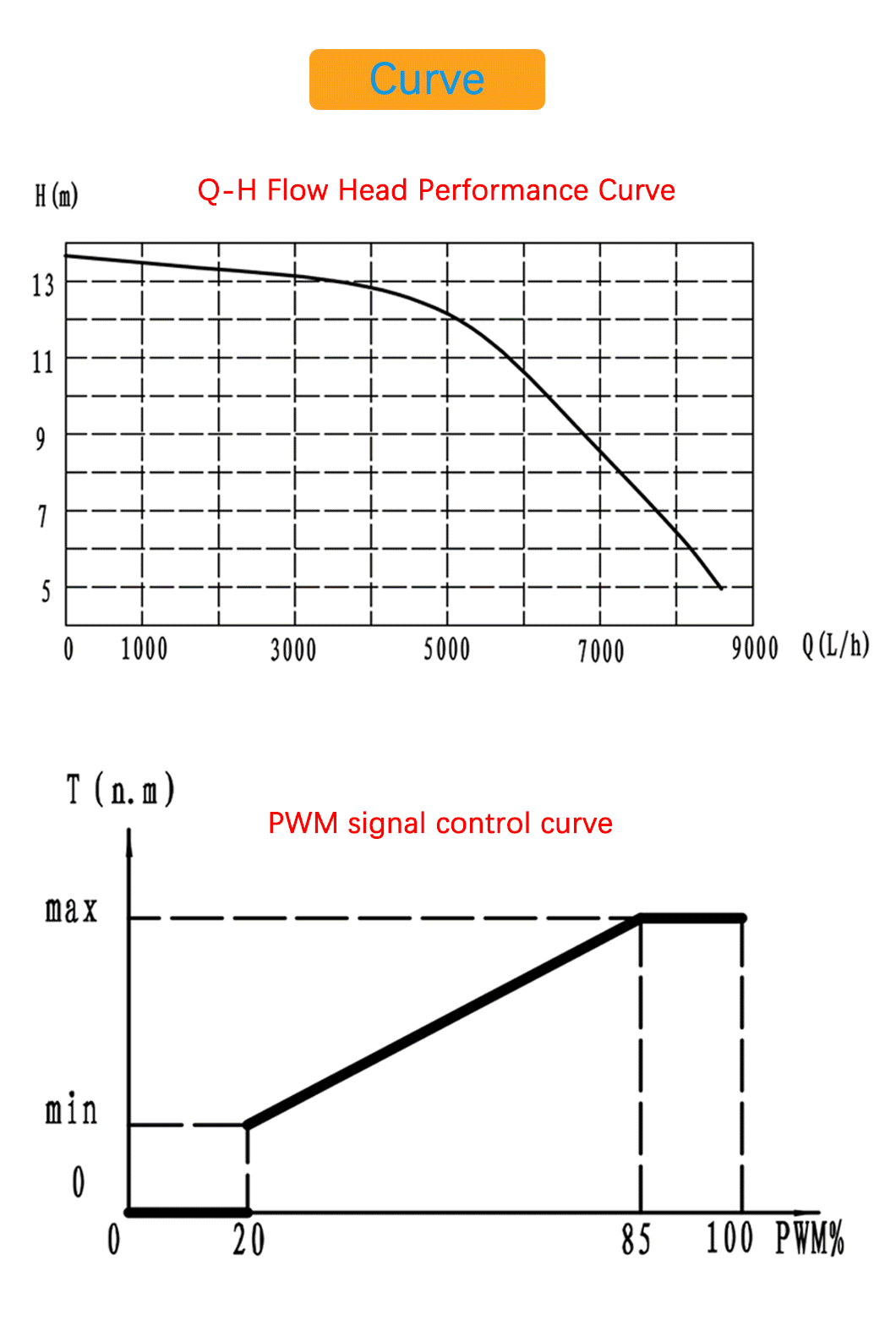
| Rated operating condition | At a head of 12m, maximum flow rate ≥5000L/h, current ≤15.5A |
| Maximum head | ≥13m |
| Storage temperature | -50°C~125℃ |
| Operating ambient temperature | -40°C~100°C |
| Permissible medium | Antifreeze |
| Pump life | ≥20000 hours |
| Protection class | IP68 |
| Mating connector model | AMP1-1418390-1 |
| Noise | ≤60dB measured at a distance of 1 meter |
| Function description | Reverse polarity protection, dry-running protection, locked-rotor protection, overvoltage protection |
What are the advantages of automotive electronic water pumps compared to mechanical water pumps?
* Precise Control and High Energy Efficiency: Can precisely control coolant flow according to actual needs, avoiding unnecessary energy consumption and resulting in lower energy consumption than mechanical water pumps.
* Improved Performance: Accelerates the warm-up process, helping to reduce fuel consumption and emissions during cold starts.
* High Reliability and Long Lifespan: Utilizes direct electric drive, reducing mechanical transmission parts and friction, lowering the risk of leakage, and extending service life.
* Flexible placement and low noise: Relatively small in size, allowing for flexible installation locations, facilitating vehicle layout, and operating with low noise.
* Intelligent integration: Flexible control methods (PWM, bus) and multiple protection functions (over-temperature, over-voltage, over-current, etc.).